Infrastructure Control and Ideational Binding in China’s International Big Science Projects
Project Leader: Anna L. Ahlers
Empires have often established their dominance and legitimacy by possessing and controlling advanced knowledge and technology. Today, global political centers are also hubs of innovation and academic excellence. Making China a global scientific power is obviously central to the government’s development vision and closely linked to the country’s current foreign policy strategies. A recent key aspect of China’s science policy is the promotion of internationally oriented “big science,” i.e., cost-intensive, large, and often globally unique apparatuses, institutions, and clusters dedicated to a specific and novel research field.
The project provides innovative perspectives on China’s imperial practices in this area. It regards China’s government-funded large-scale infrastructures—including huge telescopes, giant particle colliders, and massive life science databases—as a means for the country to gain a competitive edge at the frontiers of research and to gain autonomy from structures long dominated by North America and Europe. It constitutes the first systematic study of how China’s political and academic elites develop, plan, and implement big science strategies, with the aim of establishing the country as a world center of knowledge production and potentially capitalizing on the asymmetric dependence of its partners. The project also explores whether big science infrastructure ideationally binds foreign actors to China, not only through unique material resources but also by requiring adherence to local research practices and promoting specific scientific values within these facilities under Chinese governance.
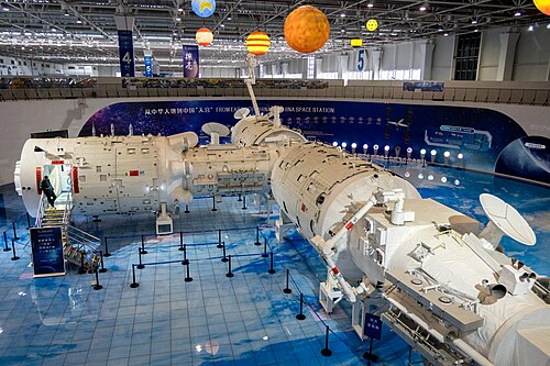
The project team employs document analysis, interviews, focus group discussions, and a survey, and conducts in-depth case studies of three China-led large research infrastructure projects. Intended cases currently include the Five-hundred-meter Aperture Spherical Telescope (FAST), the China Brain Project, and China’s Tiangong space station. We examine how elite actors in China’s science policy and organizations learn and adapt their strategies in response to demands for technological autonomy and the global securitization of science. Besides mapping China’s big science projects, we focus on their governance, particularly how foreign research partners are selected and engaged. By analyzing perceptions of these projects and their outputs in global scientific and policy circles, we gauge the global status and potential centrality that China’s large-scale research infrastructure can attain. In doing so, Scientific Empire sheds light on the forms of control and ideational binding that China achieves through these big science initiatives at the imperial center.
 Learning Empire